1. John Maxwell's recent book sounds worth the read. Get the gist of Everyone Communicates, Few Connect: What the Most Effective People Do Differently in David Mays' Book Notes.
2. There's a new iPhone app to measure who does the most talking in a conversation. Sounds like it could use some tweaking, though, and I bet most of us have a pretty good idea of the communication dynamics around us. The Talk-o-Meter can prove what you may already suspect (source: GOOD). Though I don't think we need a 50/50 split to have a good conversation. Some people really seem to guard their right to remain silent. What do you think?
3. The ministry team I'm part of has what seems to me a good model for facilitating regular group sharing on our conference calls. Each person has two minutes to share a personal report and/or item for prayer. After each person talks, the leader appoints or asks for a volunteer to pray for that person, and then the pray-er shares his or her update. Things move pretty quickly; and all nine of us have a chance to hear from each other and be heard in 20-30 minutes.
4. One of our group's core values is listening. The Church Partnerships Team was formed to serve as a point of personal connection between Pioneers and the several thousand churches that send out and support missionaries through our agency. It's not fund-raising or recruitment, though there is a significant "PR" element. Typical conversations between church ministry leaders and church partnership facilitators focus on trying to understand the world of the church leaders and explore ways we can help them and collaborate.
I can't see myself working as a partnership facilitator full-time like most of my colleagues - I seem to do better a bit more behind the scenes. Calling and meeting with church leaders may be a job best left to the guys-with-ties. But it's an honor to be part of their work. Lots of shared values. Sometimes I miss the companionship of a face-to-face team, though.
I have come to believe that by and large the human family has all the same secrets. – Fredrick Buechner
Friday, June 10, 2011
Wednesday, June 08, 2011
Internationally Aware Locavore
Between work and studies I'm slowly savoring Craig Goodwin's book Year of Plenty, vacillating about which idea or chapter I should blog about here. The book describes one family's journey away from a life of American consumerism to something both simpler and more responsible but also more relational. Watch this space for more.
The writers at Read the Spirit published a good review of one of the most interesting elements of this sustainable-living story, the fact that their strategy included an international element.
See Summertime Family Inspiration: Enjoy a Year of Plenty ("How an ordinary American family of modest means managed to ‘Think Locally, Act Globally’")
Tuesday, June 07, 2011
Remembering Nichole
A good friend is preparing to move his family to Central Asia to teach there for a couple of years. I'm trying to pass along various things that might prove helpful for them. When he commented on my May 5 post I remembered another I'd written which reveals some of the cultural - and cross-cultural - wrinkles I wrestled with in building relationships in the Central Asian context. Here's a post from 2010.
I met "Nichole" the day before I moved into her parents' house. A pretty Uzbek girl in her early 20s, Nichole was fascinated by the foreigners in her city. She had a part-time job working for some of them, friends of mine, and lived in a house not far from them. I needed a local family to live with; her folks could use the rent money. They had the space, and the house was suitable. So we decided to give it a try.
So began what is probably the most significant cross-cultural relationships I've ever had. There have been others with whom I had more common ground, or learned more from, but nobody I had more fun with than Nichole, nor anyone with whom I experienced more of what differences in culture can really mean - on a gut level...
See Nichole's Story.
Saturday, May 28, 2011
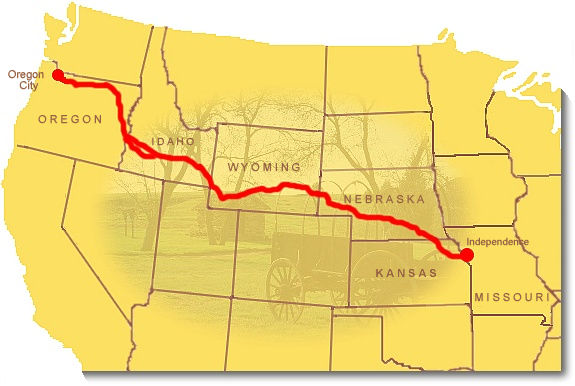
Crossing The Country by Covered Wagon
![]() |
I knew that the great "Pony Express" was rendered obsolete by the introduction of the telegraph less than two years after it began. But I recently realized that another touchstone of American history, the settlement of the West by pioneers who traveled across the continent by covered wagon, lasted just over one generation (1840-1869). At that point the completion of railroads chopped the journey west from a treacherous trek of six months by wagon to a mere one-week train trip.
One spot through which all those covered wagons were driven - carrying about 500,000 pioneers in that 29-year period - was Casper, Wyoming. You know what they say: location, location, location. Casper is near what may be the best route across the Rockies. It's built beside the [once] great Platte River, which travelers coming West had followed for hundreds of miles. Here each emigrant - having left the United States behind - would say goodbye to the river and strike off for destinations in places like Oregon, California, and Utah.
| Image: National Park Service |
The people of Casper seem to have accepted the fact that their home is and apparently always has been a place people come through on their way someplace else. In fact, they've built up a modest tourist industry around that aspect of their history. Driving from Washington back to Colorado last summer I visited the National Historic Trails Interpretive Center as well as several of the nearby places of significance to those who traveled these trails.
It goes back pretty far. The 80,000 settlers who came through on the Oregon trail were following in the footsteps of Arapaho, Lakota Sioux, and Shoshone.
Some 70,000 Latter-day Saints came, too, fleeing persecution and seeking their own promised land. Many of the most helpful tools and strategies for surviving the trip were developed by the Mormons; they were disciplined and organized. (Legalistic religions come with a silver lining...)
When the California gold rush got under way, the trail became a highway. One local resident noted that 600 wagons had passed by his house in a single day. On the other hand, I was pleased to read the entry from the journal of one man who reported a guy on horseback heading the other direction, returning to the East. He explained that he simply couldn't go on; he loved his wife more than gold.
Native Americans were once glad of trading partners and scouting jobs. Now they complained that there wasn't enough food to go around; these people were taking over, moving in as if the land were not already inhabited.
Perhaps those covered-wagon days play a big part in our national history because they left such a mark on the families who rode those trails. It was probably the hardest, bravest thing they had ever done. It took so much courage. Many people thought you were crazy. Others envied you. It was a little like going to war. Or traveling to another country. In a way, it was both.
Have you ever been in that kind of situation? The emotions run so high. You don't know if you will survive. If you do, it knits you together together with others who have made that journey, especially the ones you went with. In the context of a lifetime, it may have been a brief experience, but it was one that will stay with you all your life. You save the souvenirs. You pass down the stories to children and grandchildren.
So many lost so much along the way. The more crowded the trails became, the more they were lined with dead animals, broken-down wagons, abandoned treasures, and hundreds and hundreds of graves. Children fell off the wagons and got run over. Others emigrants grew sick and died - cholera was a big killer - drowned in a river crossing, or were caught in storms. Not many were killed by Indians or wild animals, but some.
Timing was important. Everyone knew that if you started at the right time, you'd find enough spring grass along the way to feed your stock. But wait too long and you'd risk getting caught by an early snow in the mountain passes. You knew you'd probably make it to your destination before snowfall if you reached Wyoming's Independence Rock by the fourth of July. That must have been a jubilant place; everyone stopped to scamper up the rock and carve their names. There were dances, and sporting events, and weddings there. A huge celebration took place every July 4.
By the time you'd reached this point, you'd probably gone through a lot. Some of the things you feared had not come to pass, at least not yet. Others, you'd overcome and survived. You'd followed the Platte River longer than you could remember. I bet the kids had stopped asking, "are we almost there yet?" Living out of a wagon was starting to feel normal.
You still had at least another thousand miles to go.
Can you imagine leaving your country and everything you knew to journey to Oregon Territory? Would you have gone? If so, what do you think would have been the most frightening or difficult part of the journey for you?
Wednesday, May 25, 2011
Jiminy Cricket, Temptation Strikes Again
Jiminy Cricket: Now, you see, the world is full of temptations.
Ever struggle with your motivation to stay on the straight and narrow? Had to laugh at an experience I had this morning. Pulled into the Safeway parking lot to get some milk and half-and-half before the roommate arises and finds we have none. She and I both like the white stuff in our coffee. My turn to buy.
But then I thought: this isn't right. I'm not going to the deli. I'm going to the dairy section. Huh.
The facing car had a license-plate holder on the front. It read,
A conscience is a tricky thing, is it not? I don't tend to guard mine very carefully. I cheat and cut corners when I don't think it matters. Yet I've also discovered that if I want my will to be strong enough for faithfulness in the big things, the best preparation is being faithful in the small ones.
I guess the other trap is self righteousness. A track record of faithfulness in the small things is no reason for pride and arrogance. Jesus had some tough words for those who considered themselves good people:
Pinocchio: Temptations?
Jiminy Cricket: Yep, temptations. They're the wrong things that seem right at the time... but... uh... even though the right things may seem wrong sometimes, or sometimes the wrong things, may be right at the wrong time, or visa versa. Understand?
Pinocchio: Uh-uh. But I'm gonna do right.
Jiminy Cricket: Atta boy, Pinoke! And I'm gonna help ya.
Ever struggle with your motivation to stay on the straight and narrow? Had to laugh at an experience I had this morning. Pulled into the Safeway parking lot to get some milk and half-and-half before the roommate arises and finds we have none. She and I both like the white stuff in our coffee. My turn to buy.
Deli Parking.... says the sign where I often stash the Honda when I'm just going in for one or two items.
15 minutes
But then I thought: this isn't right. I'm not going to the deli. I'm going to the dairy section. Huh.
The facing car had a license-plate holder on the front. It read,
He died for meOkay, okay, it's a sign. Literally, anyway. I'll go. I moved the car three spaces down. It didn't kill me.
I'll live for him.
A few minutes later, walking back to the front of the store with my purchases, I realized this would be a great day to make a quiche; now we had milk and there's a pie crust in the door of the freezer just waiting to be used. Ironically, the one ingredient I would need to buy was something available only in, yes, the deli...
I suppose I could have kept that parking space after all, huh?
A conscience is a tricky thing, is it not? I don't tend to guard mine very carefully. I cheat and cut corners when I don't think it matters. Yet I've also discovered that if I want my will to be strong enough for faithfulness in the big things, the best preparation is being faithful in the small ones.
I guess the other trap is self righteousness. A track record of faithfulness in the small things is no reason for pride and arrogance. Jesus had some tough words for those who considered themselves good people:
"Woe to you, teachers of the law and Pharisees, you hypocrites! You give a tenth of your spices—mint, dill and cumin. But you have neglected the more important matters of the law—justice, mercy and faithfulness. You should have practiced the latter, without neglecting the former." (Matthew 23:23)>> Any tips for avoiding legalism and antinomianism, both? I'd be glad to hear them. Or, of course, your silly stories!
Monday, May 23, 2011
Women’s Stories – Another from Russia
1. The Foundation of a Loving Family
4. A Journey in Faith
S. was quite young when her father died, leaving behind a wife and two children. Maybe that’s why the family pulled together as much as they did.
“My mother was trying to provide. But we had everything by her help, as much as or even more than in a complete family. I was with my grandparents a lot. We were loved very much and raised happily.
“Looking at my grandparents I feel inside myself a great feeling that being moral is very important. My grandparents were Muslim, real Muslims, and read namaz [say the ritual prayers]. They were full-hearted about it. Their children, my mother's generation, only knew the rules and did not follow everything like the parents did. They were not as conservative.
“My grandfather was the head of the family. All important questions, for example financial questions, he was the giver of the right to do everything or not. A woman was to do what he would recommend, to give a life to his order. Daily house life, everything about it. But personally in our family we never faced a situation where a woman would be forced to do something or pushed to do things.
“My grandfather loved my grandmother very much. My grandmother is loved by everyone in the family. Now she is 90 years old. Sometimes older people may be like challenged to know what to do, to be wise about today, but she is still wise. She amazes me. She still has authority above all her children. We honor her so much. Every word she would say we follow her; we want to honor her completely. That is how it happened in our family, that's what I have to say.”
The family continues to live close to one another, in the same apartment building in fact. Grandma comes over for lunch every day.
2. Only God Can Help My Brother
So many Christians, whether living in the West or in the East, seem to believe that Muslim family life is all about abuse and repression. So I was glad to hear about the strong foundation S. felt she had from being raised in a traditional but fairly healthy family.
I did have a hunch that might be more to her story, though, and as our conversation continued S. told us that she was a Christian, a believer in Jesus, and that it happened that she was the first in her family to choose that direction. Ah; this must be why our friend (a Christian leader) had suggested we talk to S. and had set up the interview with us.
Like many of the believers we met on this trip, the one thing S. was really happy to talk about was what God had done in her life. Rather humbling. I'd come hoping to hear more about Islam and culture and how relationships work in this culture, but I kept meeting believers from various backgrounds who wanted to tell me how Jesus had changed their lives! We wondered how S. had become a Christian and how her close-knit family had responded. As the story unfolded, we found out.
S. told us God had allowed her to go through a situation where she was brokenhearted. And coming from a loving family played a significant role in what happened next. Was S. was broken over was a tragic situation in the life of one of one of her family members.
“My brother had some problems and begin to drink. In the beginning it helped him go away from his problems, but the troubles in the end grew to be a disease he could not bear.
“It was so unhappy for me to see him die inside. I tried all I could, took him to hospitals and set up meetings for him, everything medical that can be done, I learned about and tried it all. I did not want the thought that he would die from what he was doing.
“One day a strange thought came into my mind: Only God can help my brother. So I went on the Internet and typed in, ‘cure alcoholics with God.’ The computer said, ‘Did you mean…’ and gave suggestions. The first one was ‘Christian Rehabilitation Center for the Alcohol Addicted.’
3. Intimacy, Independence, and the Internet
Amazing, isn’t it, the way people all over the world turn to the Internet with their deepest and most intimate questions or struggles? This came up several times during my time in Russia. In one of the most helpful interviews we had a pastor told us explained that they are trying to encourage the people in their church to be outward-looking, even from the beginning, to share what God is doing in their hearts.
“This is one of our problems: we are not a culture of communicating, relating to each other. What is easy for a European, to talk to and look at each other, maybe it's natural for you too but we don't have it in Russia.”
He attributed this reticence to Communism. His church has attracted a lot of young people and they are encouraging them to be active in social media and share what they are learning in those environments.
I’d been emailing with a friend back in the States who said, “The Russians are a mysterious people, eh? And the effects of 70 years of Communism are still ingrained in their souls. Soviet Communism didn't just happen there by chance; it was fertile ground for it to take root.”
In a way, I’d been able to relate to the Russians and “Russified” people we’d met better than I can with people from some other cultures. When I’ve been in places where friendship means sitting around with uneducated women, drinking tea and gossiping for hours, I quickly feel restless. With many of the Russians we met I felt much more at home and among people like me. Yet I wasn’t sure if I liked the characteristics we had in common.
The pastor had suggested another factor that gets in the way of communication and community:
“Our city is quite wealthy. There is some pride because of that. It makes our work difficult, because people come to Christ often when they are more desperate in some way. People here are busy with themselves. In the postmodern world, individualism is risen high up. The Western world will see the fruits of that. When there is money, you have individualism. People start to think only of themselves. We have to fight with that here. Even these rich people, they know they are vulnerable inside and do need Jesus as well.”
I hadn’t made these connections before. When you put together the independence and individualism that come from wealth with the mistrust and fear of being controlled that come from the (perhaps inevitable) excesses of Communism, well, that’s quite a lot to overcome. My own independence and individualism, mistrust and fear of being controlled... they may have different roots but similar fruit. So ministries using media and the Internet may have a significant part to play both in places like this wealthy Russian city and in the world in which I live, too.
4. A Journey in Faith
S. did not tell us a great deal more about how her brother was set free from alcoholism, but she did tell us about her own journey toward God and the stages she went through in sharing that with others in her family. So I’ll close with her words.
“I called and they asked me to come in, myself, to meet with them, so I came to the city. It happened that some people who worked with this program had just become missionaries in my town and even lived in the same building. I started to communicate with those missionaries. I saw their faith and deep connection to what they believed in. They were not perfect. I saw them do some wrong things. But they had great faith in the God they worshiped. I decided to keep this connection; maybe inside I wanted to believe as they did.
“They gave me a sermon video to watch and while I watched it I don't know but inside I had a feeling, God exists. The sermon was about the inheritance you have to give your children. Not just material things like money but their inheritance is what you give them in spirituality. Before, I had thought money was what it was important for children to receive, but then I understood it was not the only thing the generations after you would receive. I realized I didn't know anything about God.
“I understood faith was not only traditional things like sitting down for a big meal with my family, not just religious rules you have to do, not things on the outside but something that comes from inside. I wanted to have that inside. My heart opened to it, and I started to learn things. What I had was not enough; I wanted to see more sermons, and read a lot. It was like my spirit came out of a trap and wanted nourishment of faith and knowledge of faith.
“I would go to my brother and try to give him the literature but he would not accept it. Then I had a vision and saw my mother and brother standing beside me shoulder to shoulder worshiping God; this did not happen in the physical world, but I took it as what God showed me to keep me thinking about it, to remember and keep going.
“I would try to put videos on the table, give them literature, bring up the ideas in conversations, and this seemed to make it worse. Conversations became strained. But I called out, ‘God, you said, “the whole household will believe”! I give my whole family to you; this is what you promised.’
“I was depressed when I saw my brother. But because I prayed and believed now I was changed, smiling, cheerful in life no matter what happened, because of God, and I think that is what they saw. So I decide I would believe and pray and pray, not try to touch them on the topic of Christianity but just believe and pray.
“Then one day I was going to a Sunday service when I heard the words: Go and take your mother with you. So I went back and called her. She's disabled and lives in same apartment with my brother. All he was going through influenced her as well and she too was fading and dying inside. This time I said, ‘Come with me today,’ and without saying anything she gathered up her things and came with me. Before she would always say ‘No, I cannot, we are Muslim; we don't do that.’
“But that Sunday she came, and while she was there she went through her whole life [saw it pass before her eyes?]. She believed in God and repented. I realized that's what happened to her on that day.
“With time, my brother saw she had changed. She was showing God's love to him and had become a happy person. She would not nag him, her attitude was different. Sometime later he said, ‘I want your God.’
“It was tough to tell my grandmother," she added.
Ah yes, remember the grandmother? The beloved, devoutly Muslim grandmother?
"For a while we did not tell her so we would not hurt her feelings, but she did not make a [fuss]."
I've found this true in other Muslim communities and families as well. The bonds of love and loyalty can often stretch more than you might thing. Societies in which people are completely ostracized from their families for turning to Jesus are quite rare.
"My greatest desire is to see my whole family to become Christians," said S. "It is my special idea. I really want it to happen.”
See also: Women's Stories: A Central Asian Immigrant
Saturday, May 21, 2011
Not Personalized, and I'm Taking That Personally
Ugh, what a week. Here's my melodrama. You may want to skip it, but writing it out usually helps restore my perspective, and maybe you'll find something that helps you, too.
Part of the stress is a work project in which I keep sabotaging myself, hating the pattern but feeling helpless to break it. It's not huge, I'm the one who makes it messy. It is the kind of thing I really ought to be able to do, I think. But there's some fear, danger, and sliminess clinging to it and I can't seem to keep it clean. Several days or parts of days went pretty well: I kept on top of the stress and my reactions to it, praying as I went. Felt like Jesus and I were taking some fairly decent baby steps, navigating the overfurnished living room of my mind to get where we needed to go. But I fell down pretty frequently, and sometimes it hurt.
Then there's the growing pressure that comes from taking none of the holidays we've had, all year. I've had travel or teaching on every one, and a lot of my weekends too. Work piling up in-between doesn't encourage the use of comp days. I am taking Memorial Day weekend off to play. And at least part of the following week as vacation. There's some stress associated with that, too, though, since I'm going to spend it with Chris and his family. Yup, I fly out early Friday. Meet the beau's clan for the first time. His mom is picking me up at the airport. It gives her an excuse to go to the Ikea in Portland. We'll have Swedish meatballs for dinner! Now, it could be a great week. And Chris is a great guy, and so, so generous with the unconditional and supportive love. But still I am nervous...
What else? As I mentioned before, this is the last week of my seminary class, and it's also my week to write for the ezine. Content has been piling up in a folder for six weeks and I sure hope there's something good in there. I do enjoy that task; it never get covered with the slime I seem to pick up in other areas. But I'll need to put some time into it.
Add to this mix two rather troubling conflicts striking on Thursday and Friday - one over email, the other by phone. A phone call conflict - heck, any kind of phone call - usually catches me off guard and feels like a slap in the face, though it may lead to the quickest closure. An email conflict may stretch out uncomfortably, but I appreciate the opportunity to choose my words.
Then, bra shopping. Perfect storm, eh? Gentlemen, you may want to leave at this point. Girl stuff. Though you may have body-image issues now and again as well. They rarely seize me unless other things have left me particularly vulnerable.
I suppose it's understandable that our modern consumer culture has standardized so many things. Taken the vast array of human preference, taste, and need and responded with efficient systems like the creation of "sizes." But doesn't it feel dehumanizing, at times? You know, when you find that your feet aren't normal, that pants are either too short or too long for your legs, or that you look simply awful in the uniform you're required to wear?
It must be particularly hard in a world where symmetry equals beauty to find yourself really a-kilter and require such things specially made. Sometimes I long for the day of seamstresses and cobblers when more things in life were made-to-order... Personal. Though I suppose I shouldn't romanticize it too much. What if I could only have two pairs of shoes, or one, and spent my days sewing for my family? (I'm sure I could bear it, but sewing clothing is seriously outside my set of skills, interests, or pleasures...)
But back to those darn undergarments. Here's the problem. I can walk into a store's lingerie section and search for half an hour before I find a - um, well, let's be specific, 36A. (Even then I'd better try it on.) I can always find something adequate. But I get the message: Normal women have larger breasts or smaller ribcages, not smaller-than-average breasts on an average-sized body. I do like my body, and I'm not waaaaaay off. It's just that I'm neither 34A or 36B; I'm the size they don't like to make. My sister shops in fancier places. Not sure if that would make things harder or easier for me. But looking online, I'm not hopeful.
Shame, shame, shame. Do you ever fall into such a pit, feeling that it's a perfectly awful thing to be you? What triggers that for you? I'll be OK, but meanwhile I'm talking to God about these things. He's gentle and his perspective is spot-on. When I ask him, "What do you think of this, or that?" things have a way of falling into place and becoming much simpler and less slimy than they had been when they were cluttering up that living room of my mind.
One practical tip: Feeling ashamed of yourself? Writing or talking it out may help. Prayer can really clear things up. But avoid "retail therapy." Too many pitfalls!
Subscribe to:
Posts (Atom)